
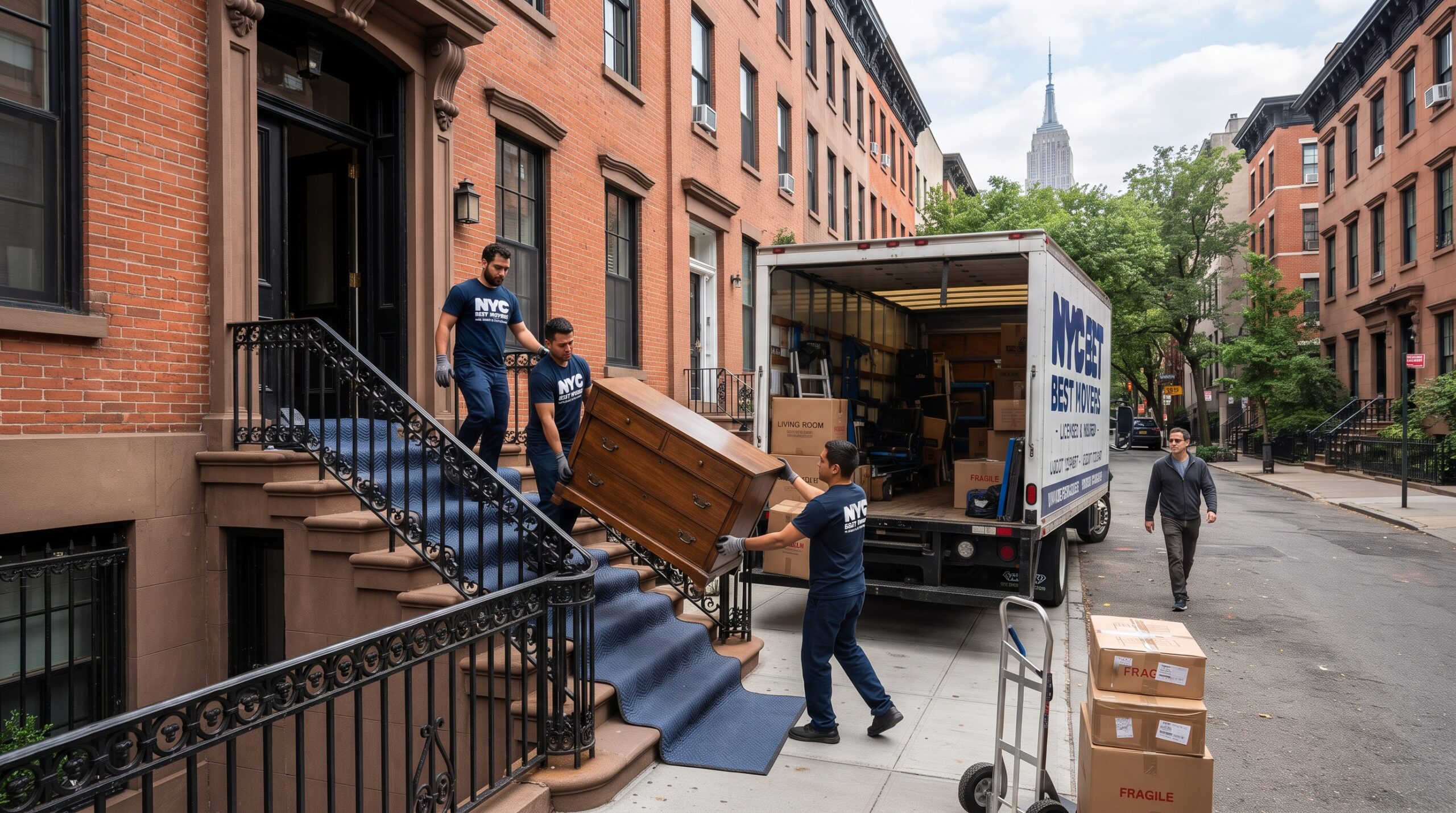
Moving in New York City comes with problems that most other places never deal with. Fifth-floor walk-ups with no elevator. Buildings that only allow moves between 9 am and 4 pm on weekdays. Streets where a truck cannot legally stop for more than a few minutes. Certificates of insurance that your building management demands before anyone touches a box. A moving company that handles all of this smoothly in a suburb may fall apart on a Tuesday morning in Manhattan.
That is why choosing the right crew matters more here than almost anywhere else. This guide covers what separates a reliable New York moving company from the rest, what the process should look like, and the warning signs that tell you to walk away.
Why NYC moves go wrong
Most bad moving stories in the city trace back to one of three causes.
The first is a company that underestimated the job. A quote given over the phone based on “a one-bedroom apartment” tells the mover very little. One-bedrooms in Astoria and one-bedrooms in Tribeca can differ by a thousand square feet and by four flights of stairs. When the crew arrives with a truck too small or two people too few, the day stretches into the evening and the final bill climbs.
The second is a company that did not prepare for building requirements. Many co-ops, condos and managed rental buildings in New York require a certificate of insurance (COI) naming the building as an additional insured party. Without it, the doorman will turn the movers away. Reliable companies ask about this during the quote, not on the morning of the move.
The third is the classic hostage-load scam. A company gives a low estimate, loads the truck, then refuses to unload until the customer pays a much higher amount in cash. This is illegal, but it still happens, and it almost always involves a company with no physical address, no license number and a suspiciously cheap quote.
What licensed and insured actually means
Any mover operating within New York State needs a license from the New York State Department of Transportation (NYSDOT). For moves that cross state lines, the company needs a USDOT number and operating authority from the Federal Motor Carrier Safety Administration (FMCSA). Both numbers should appear on the company’s website, its trucks and its paperwork.
You can check these yourself. The FMCSA runs a public database where you can enter a USDOT number and see the company’s registration status, insurance filings and complaint history. If a company hesitates when you ask for its license numbers, or gives a number that returns nothing in the database, that is the end of the conversation.
Insurance is a separate question. By default, movers are only required to cover your belongings at a rate of 60 cents per pound per item. A 30-pound television that breaks would be worth $18 under that standard. Reliable companies explain this clearly and offer full value protection as an option, which covers the actual replacement cost of damaged items for an additional fee.
What a proper quote looks like
A reliable New York moving company will want to see your apartment before committing to a price. This can happen in person or through a video call where you walk through each room. Either way, the mover needs to see the actual volume of furniture, the width of the stairwell, the parking situation outside and any items that require special handling.
The quote should then arrive in writing and include:
- The type of estimate (binding, non-binding, or binding not-to-exceed)
- Hourly rate or flat rate, and what triggers overtime
- Number of movers and trucks assigned
- Charges for stairs, long carries from the truck to the door, and elevator waits
- Packing materials and packing labor if you are having the company pack
- Whether the COI is included or billed separately
- Cancellation and rescheduling terms
Binding estimates lock the price unless you add items or services. Non-binding estimates can change, though federal rules cap the amount a mover can demand at delivery for interstate moves. For local moves, hourly rates are common, so the quality of the crew directly affects what you pay. A well-organized team of three that finishes in five hours costs less than a disorganized team of two that takes nine.
Signs of a company worth hiring
Beyond the paperwork, there are practical signals of a mover that operates seriously in the city.
They know the buildings. Ask how they handle a walk-up in the West Village versus a doorman building on the Upper East Side. A company that has done hundreds of city moves will have specific answers about elevator reservations, protective padding for lobby floors and how they deal with alternate side parking on move day.
They have a physical address in the metro area. Brokers who resell your job to whichever crew is available that morning tend to operate from a phone number and a landing page. A company with a warehouse in Brooklyn, Queens or New Jersey has its own trucks, its own staff and a reputation it needs to protect.
Their reviews mention specifics. Generic five-star reviews are easy to buy. Reviews that describe a particular crew lead by name, mention how the movers handled a difficult piece of furniture, or explain how the company resolved a problem tell you far more. Look at reviews across Google, Yelp and the Better Business Bureau rather than relying on testimonials hosted on the company’s own site.
They communicate before the move. A confirmation call or email a day or two ahead, with the crew’s arrival window and the crew lead’s contact number, is standard practice for professional companies. Silence until the morning of the move usually means silence when something goes wrong.
For an example of how an established company presents its services for the five boroughs, take a look at these movers in New York City, which lists the types of moves handled and lets you request a quote directly.
Red flags to take seriously
Walk away if you encounter any of the following:
- A large deposit requested upfront, especially in cash or by wire transfer
- A quote given without seeing the apartment, either in person or by video
- No license numbers on the website or truck
- A company name that changes between the website, the contract and the truck
- Trucks with no branding, or rented trucks on a job that was sold as a company move
- Pressure to sign quickly because “the price goes up tomorrow”
- A contract with blank spaces the mover says will be filled in later
None of these on their own guarantees a bad experience, but each one is common enough in complaint records that it should stop you.
Timing and cost in the city
Demand for movers in New York peaks at the end and beginning of each month, on weekends, and through the summer. The first and last few days of the month are the most expensive and the hardest to book. If your lease gives you any flexibility, a mid-month, mid-week move can lower the hourly rate and give you a wider choice of companies.
Expect a local move for a one-bedroom apartment to take four to six hours with a crew of two or three, and a two- or three-bedroom apartment to run six to ten hours with a larger crew. Hourly rates for licensed companies with their own trucks typically start above $100 per hour for a basic two-person crew and rise with crew size and season. Any quote far below the market range should be treated with suspicion rather than excitement.
Preparing on your end
Even the best moving company depends on a few things from you. Reserve the elevator with your building as early as possible, and do the same at the destination building. Ask both buildings for their COI requirements and pass them to the mover in writing. Label boxes by room. Set aside a bag of essentials you will carry yourself, including documents, chargers, medication and anything of high value.
On move day, be there or have someone you trust present at both ends. Check the inventory sheet before the truck leaves and again on delivery. Note any damage on the paperwork before signing, because claims filed later without a record on the delivery documents are much harder to win.
Final word
Reliable movers in New York City are easy to identify once you know what to look for: valid license numbers you have verified, a written estimate based on an actual walkthrough, insurance options explained upfront, and reviews that describe real experiences. The companies that meet this standard cost more than the ones that do not, and they are worth it. A move in this city is stressful enough without spending the day negotiating with a crew you cannot trust.

Born and raised amidst the hustle and bustle of the Big Apple, I’ve witnessed the city’s many exciting phases. When I’m not exploring the city or penning down my thoughts, you can find me sipping on a cup of coffee at my favorite local café, playing chess or planning my next trip. For the last twelve years, I’ve been living in South Williamsburg with my partner Berenike.