
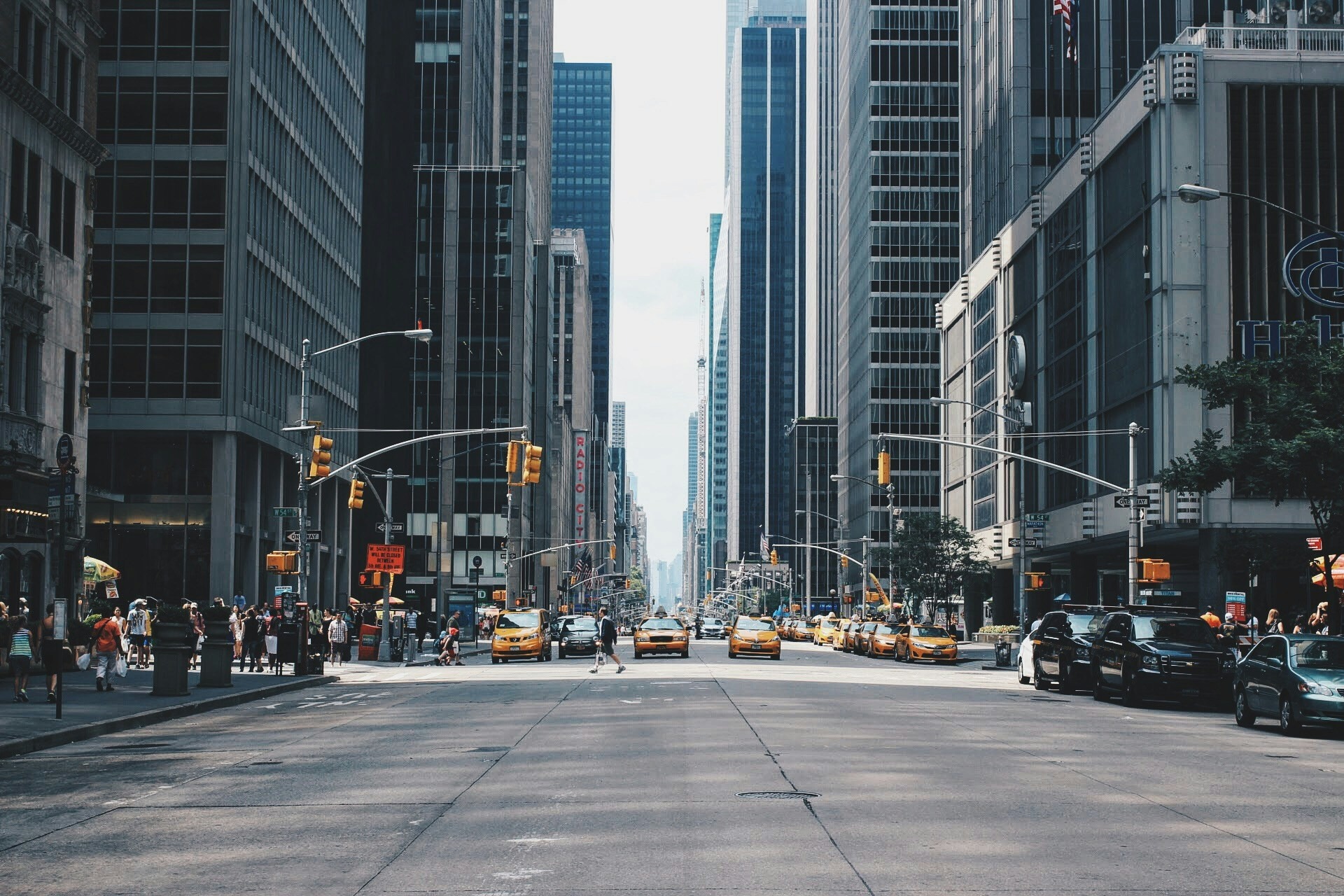
A delivery van in New York City can spend more time stopped than moving. Between double-parked trucks on Midtown avenues, bridge and tunnel backups and blocks where every curb space is taken, a driver may make thirty stops in a day and cover fewer miles than a suburban technician does before lunch. Fleet management in the city follows different rules, and the data businesses need from their vehicles looks different too.
Why city driving changes the cost of every route
In most of the country, fleet costs grow with distance. In New York, time is the bigger factor. A plumber’s van stuck behind a stalled bus on Second Avenue still has a technician on the clock, and a delivery driver circling a block for twenty minutes to find a legal spot pays for that search in wages and fuel without moving the route forward.
Timing also carries a direct price. Vehicles entering Manhattan south of 60th Street pay the Congestion Relief Zone toll, and small trucks pay $14.40 during the peak period and $3.60 overnight, while vans and pickups pay less. For a fleet that enters the zone several times a day, when vehicles cross into Manhattan becomes a line item worth planning around.
Parking adds another layer. Commercial vehicles compete for limited loading zones, and a business with several vans in the same neighborhood may find that drivers spend a large part of each stop looking for space. These delays rarely appear on an invoice, which is why they are easy to underestimate.
What urban fleets need from telematics
Telematics systems record where vehicles go, how long they stop and how long engines run. Outside cities, managers often look first at mileage and fuel. In a dense city, the most useful numbers tend to be different:
- dwell time at each stop, which shows where crews or drivers lose time between arrival and departure
- engine running time while parked, which reveals idling during long unloading or waiting periods
- entry times into tolled areas, which helps when deciding whether some trips can move to off-peak hours
- the order of stops actually driven compared with the planned route
When businesses compare fleet telematics technology providers, city-specific questions deserve particular attention. Managers should ask how a system reports short stops, how it handles areas where tall buildings can weaken GPS signals, and whether reports can be grouped by neighborhood or borough rather than only by vehicle.
With a few weeks of records, patterns usually emerge. A florist may find that morning deliveries to lower Manhattan take twice as long as afternoon runs to Brooklyn. A service company may see that two vans regularly visit the same block on the same day and could be scheduled together. Changes like these can usually be made through scheduling alone.
Making changes the team will support
Drivers know the city better than any map, and their experience should shape how the data is used. A route that looks inefficient on paper may avoid a street that is blocked every morning by deliveries to a building on the corner. Reviewing reports together with drivers helps the business separate genuine delays from local knowledge that already saves time.
Businesses should also explain to employees what the system records and why, focusing on routing, scheduling, tolls and maintenance. Requirements for notifying employees about electronic monitoring vary by state, and New York has its own rules, so owners should check current state guidance before rolling out a new system.

Born and raised amidst the hustle and bustle of the Big Apple, I’ve witnessed the city’s many exciting phases. When I’m not exploring the city or penning down my thoughts, you can find me sipping on a cup of coffee at my favorite local café, playing chess or planning my next trip. For the last twelve years, I’ve been living in South Williamsburg with my partner Berenike.