
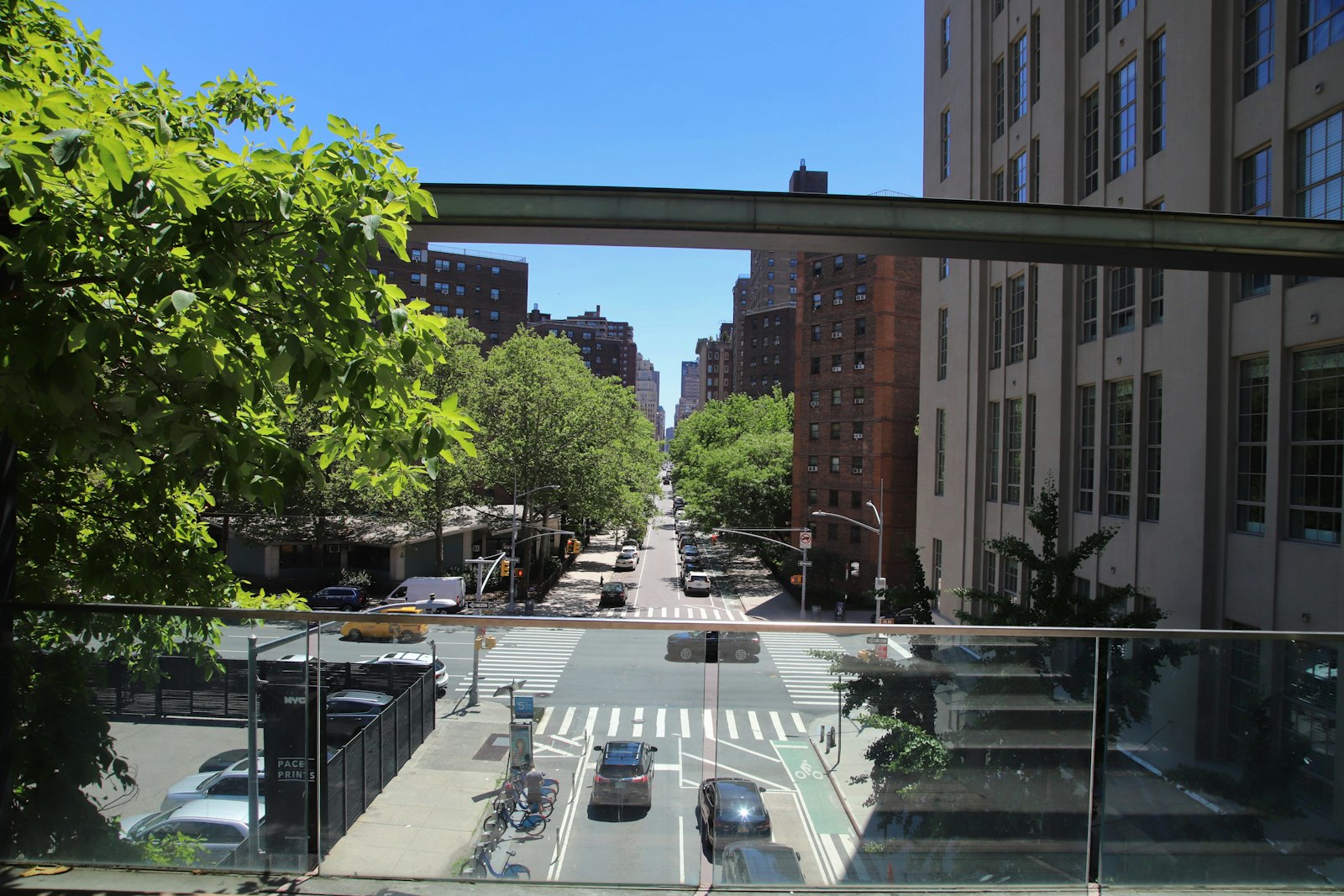
I was born and raised in this city, which means I have opinions about every mayor, including the ones who left office before I could vote. Michael Bloomberg is different. He ran New York for twelve years, from January 2002 to the last day of 2013, and he did it while being one of the richest people on the planet. He took a salary of $1 a year. I have paid more than that for a single subway swipe, and I got less done.
So this is my in-depth guide to the man: where he came from, how he made the money, what he did to (and for) my city, what his net worth actually is in 2026, and where in New York you can still go stand inside his decisions. I will tell you what I think he got right, what he got badly wrong, and which Bloomberg landmarks are worth your MetroCard. Fair warning: I live in South Williamsburg, so I have a personal stake in at least one of his rezonings.
Michael Bloomberg: Quick Facts
- Born: February 14, 1942, in Boston, Massachusetts. Raised in Medford, just outside the city.
- Education: Johns Hopkins University (B.S. in electrical engineering, 1964), Harvard Business School (MBA, 1966).
- Made his money from: Bloomberg L.P., the financial data and media company he founded in 1981. He owns roughly 88% of it.
- Mayor of New York City: 2002 to 2013, three terms.
- Presidential run: 2020 Democratic primary. Spent about $1 billion. Won American Samoa.
- Net worth: about $95 billion on Forbes’ real-time list as of fall 2026, down from $109 billion on Forbes’ March 2026 billionaires list.
- Lifetime giving: about $25.4 billion, according to his own site and Forbes.
The Early Years: Boston, Medford, Baltimore
Before he was the most New York of New Yorkers, Bloomberg was a kid from Massachusetts. He was born in Boston in 1942, and his family settled in Medford, a working-class suburb, when he was around three. His father worked as a bookkeeper at a dairy. Nobody in that house was setting out to buy a media empire.
He went to Johns Hopkins in Baltimore and studied electrical engineering, graduating in 1964. Remember that school, because it shows up again later with a lot of zeros attached. He then went to Harvard Business School and finished his MBA in 1966. That combination, an engineer’s brain and a business school’s appetite, explains most of what came next. The man built a fortune by putting numbers on screens.
I find it quietly delightful that the mayor who spent twelve years lecturing New Yorkers about salt, cigarettes and soda grew up in Red Sox country. I have never held it against him. Much.
Salomon Brothers and the Most Profitable Firing on Wall Street
In 1966 Bloomberg took a job at Salomon Brothers, the investment bank, starting as a clerk in the trading room. By 1973 he was a partner. He worked equity trading and sales and later ran the firm’s computer and information systems, which in Wall Street terms was a polite way of moving him off the main stage.
Then in 1981, Salomon was taken over by the commodities firm Phibro, and Bloomberg was let go. He walked out with roughly $10 million from his partnership stake. Most of us, when fired, go home and update a résumé and maybe eat a bodega sandwich in the dark. He used the money to start a company.
I bring this up every time a friend gets laid off. It has never once made them feel better, but I keep trying.
Building the Terminal: How Bloomberg L.P. Made Him a Billionaire
The company started in 1981 under the name Innovative Market Systems and later took the Bloomberg name. The idea was simple to describe and hard to do: give traders fast, reliable financial data and analytics on a dedicated computer terminal. Before that, a lot of bond pricing lived in phone calls, paper sheets and the memories of people who were not always eager to share.
The breakthrough customer was Merrill Lynch, which bought terminals and took a stake in the young company in the mid-1980s. Bloomberg later bought back that stake in 2008, and the reported price was about $4.5 billion. Not a bad return for Merrill, and a far better one for Bloomberg, who kept the vast majority of the company.
The Bloomberg Terminal is still the product that pays for everything. Walk onto any trading floor in Midtown and you will see the black screens with the orange text and the famous split keyboard. Subscriptions run in the tens of thousands of dollars per user per year, and finance firms pay because the alternative is being slower than the desk next door. Around that core the company built Bloomberg News, Bloomberg Television, Bloomberg Radio and, after buying it from McGraw-Hill in 2009, Bloomberg Businessweek.
The headquarters is Bloomberg Tower at 731 Lexington Avenue, between 58th and 59th Streets, across from Bloomingdale’s. You cannot wander in and play with the terminals, so do not try. I have watched a tourist ask the security desk whether there is a gift shop. There is not.
Mayor Mike: Twelve Years That Rebuilt New York
Bloomberg had been a lifelong Democrat, but he ran for mayor in 2001 on the Republican line, which was the easier path to the general election. The primary was originally scheduled for September 11, 2001. It was postponed, the city was in shock, and two months later Bloomberg beat Democrat Mark Green in a close race, helped by an endorsement from Rudy Giuliani and a historic amount of his own money.
He took over a city that was grieving, broke and nervous. He raised property taxes early, which nobody enjoyed, and ran City Hall in the style of a trading floor: an open-plan bullpen, with the mayor sitting at a desk among his staff. He was re-elected in 2005 by a wide margin over Fernando Ferrer. In 2007 he left the Republican Party and became an independent.
Then came the move that still annoys me. New York voters had approved a two-term limit for mayors, twice. In 2008, with the financial crisis underway, Bloomberg pushed the City Council to extend term limits so he could run again. The Council agreed. He won a third term in 2009, beating Bill Thompson by a much narrower margin than his money and polling suggested. I think many New Yorkers voted for him that year while holding their nose about how he got on the ballot. I was one of the nose-holders.
What He Got Right
The smoking ban. In 2003 smoking ended in bars and restaurants across the city. Bar owners predicted disaster. Instead, the number of bars and restaurants kept growing, and public health researchers have linked his anti-smoking push to thousands of avoided deaths. I remember coming home from a night out smelling of cigarette smoke every weekend. Then one day I didn’t. Thank you, Mike.
311. Launched in 2003, the 311 line gave New Yorkers one number for every non-emergency complaint: the noisy neighbor, the broken streetlight, the restaurant that gave you a funny look. Today it handles millions of requests a year. It also turned every New Yorker into a part-time municipal inspector, which, honestly, we were already.
Streets for people. Under transportation commissioner Janette Sadik-Khan, the city added hundreds of miles of bike lanes, and in 2009 Broadway through Times Square was closed to cars and turned into pedestrian plazas. Citi Bike launched in May 2013. People screamed about all of it. Now try to take any of it away and see how loud they scream.
Parks and the waterfront. More than 850 acres of parkland were added. The High Line opened its first section in 2009 and became the most copied park on Earth. Brooklyn Bridge Park started opening piers in 2010. Governors Island and Fresh Kills (the former Staten Island landfill becoming Freshkills Park) moved forward. PlaNYC, his long-term sustainability plan, set the city’s first serious climate goals.
Big bets on the West Side and Roosevelt Island. The city paid about $2.4 billion to extend the 7 train to 34th Street and 11th Avenue, with construction starting in 2007. It opened in September 2015, after he had left office, and it made Hudson Yards possible. He also ran the competition that brought Cornell Tech to Roosevelt Island, a bet that New York could compete with Silicon Valley for engineers. That bet has paid off better than most of my fantasy football picks.
What He Got Wrong
Stop-and-frisk. This is the stain on his record and I will not dance around it. Police stops exploded under his administration, hundreds of thousands a year at the peak, and the overwhelming majority of the people stopped were Black and Latino New Yorkers, most of whom had done nothing wrong. He defended the policy for years and credited it with falling crime. In 2013 a federal judge ruled that the way the NYPD carried it out violated the Constitution. Bloomberg apologized in November 2019, days before he launched his presidential campaign. Many New Yorkers noticed the timing. I was one of them.
The third term. Rewriting term limits that voters had approved, so that you personally could stay, was a bad look and a bad precedent. Voters restored the two-term limit in 2010, which tells you how they felt about it.
The soda ban. In 2012 he tried to ban sugary drinks larger than 16 ounces at restaurants, movie theaters and street carts. The courts struck it down, and New York’s highest court finished it off in 2014. I agree that nobody needs a soda the size of a fire hydrant. I also think a city with his list of problems could have found a better use of its legal department.
The luxury city. Early in his tenure he described New York as a high-end product, maybe even a luxury product. He meant it as praise. For a lot of working New Yorkers it read as a warning, and rents over the following decade did nothing to prove them wrong. He built affordable housing and pushed rezonings across the five boroughs, but the city that came out the other side was richer, safer, cleaner and harder to afford.
The View From My Corner of Brooklyn
In 2005 the city rezoned the Greenpoint and Williamsburg waterfront, which had been industrial for generations, to allow residential towers. If you have ever looked at those glass buildings along Kent Avenue and wondered when they arrived, the answer starts there. Some of it gave us real public space on the water, which I use constantly, usually with a coffee in hand. Some of it priced out families who had been here for decades. I have lived in South Williamsburg for twelve years, and I hold both of those facts at the same time every single morning on my walk.
Cyclists in my neighborhood still argue about his bike lanes too. The lanes made riding here possible. Whether they made it safe enough is a fight we are still having, as our coverage of the East Williamsburg hit-and-run makes painfully clear.
The $1 Billion Presidential Run
After City Hall, Bloomberg went back to running his company in 2014 and poured himself into philanthropy and climate work. Then, in November 2019, he entered the Democratic presidential primary, skipping the early states and betting everything on Super Tuesday.
The spending was historic. Federal filings put the total at roughly $1.05 billion over about 104 days, nearly all of it his own money, with hundreds of millions going to TV and digital ads. You could not watch a basketball game in early 2020 without seeing his face. Then came the debates, where Senator Elizabeth Warren took him apart on live television, and Super Tuesday, where he won exactly one contest: American Samoa. He dropped out on March 4, 2020, endorsed Joe Biden, and finished with 55 delegates.
Let me do the math for you, since he would want me to. That is roughly $19 million per delegate. I have played chess in Washington Square Park for less than a dollar a game, and I have still felt I got a better return on investment.
Michael Bloomberg’s Net Worth in 2026
Here is the number everyone actually came for. As of fall 2026, Forbes’ real-time billionaires list puts Michael Bloomberg’s net worth at about $95 billion. On Forbes’ annual list published in March 2026, he was ranked No. 18 in the world with about $109 billion. Either way, his fortune has more than doubled since 2020, when estimates sat around $50 billion to $60 billion.
Where the Money Comes From
Almost all of it is one asset: his roughly 88% stake in Bloomberg L.P. The company is private, it does not publish full financials, and so any number you read is an estimate. Forbes and others value it by looking at its revenue and comparing it with public competitors in financial data, such as Thomson Reuters and S&P Global. When those companies’ valuations move, so does the estimate for Bloomberg’s slice. That is the main reason his number can drop by $14 billion in a few months without him selling anything or losing a single terminal customer.
Beyond the company, he owns serious real estate, including a townhouse on East 79th Street on the Upper East Side, along with homes in other cities and countries. Next to the value of the company, the houses are a rounding error, which is a sentence I will never get to say about my own living situation.
Why He Is Missing From the Bloomberg Billionaires Index
Bloomberg News publishes one of the most widely quoted rankings of the world’s richest people, the Bloomberg Billionaires Index. Its founder does not appear on it. Bloomberg News does not cover Bloomberg L.P. or its owner, so it leaves him off its own list. That is why every Bloomberg net worth figure you see comes from Forbes or another outside source. It is the only list in the world where a man can be too rich to rank himself.
How His Fortune Compares
At around $95 billion he sits in the top twenty or so richest people in the world, behind the tech founders but ahead of most of Wall Street. He is comfortably the richest person ever to have run New York City, and I would bet my favorite chessboard he is the richest person who will ever run it. If you like this kind of breakdown, we also looked at how Damon Darling went from oil rigs to millions, on a slightly more modest scale.
Where the Money Goes: Bloomberg the Philanthropist
This is where I soften. Whatever you think of his politics, Bloomberg gives money away at a scale almost nobody matches. According to his own site and Forbes, his lifetime giving has reached about $25.4 billion. In 2025 alone he gave about $4.3 billion, which put him at the top of the Chronicle of Philanthropy‘s list of America’s biggest donors for the third year in a row. (Michael and Susan Dell would have taken the top spot if their $6.25 billion pledge for children’s investment accounts had counted for 2025, so consider it a narrow win.)
- Johns Hopkins: his old school has received about $4.55 billion from him in total. That includes $1.8 billion in 2018 for undergraduate financial aid and $1 billion in 2024 that made medical school tuition free for students from families earning under $300,000.
- Climate: his Beyond Coal campaign has spent years helping shut down American coal plants, and he has served as the UN Secretary-General’s special envoy on climate since 2021. After the U.S. pulled out of the Paris Agreement again in 2025, he stepped up funding for international climate work.
- Public health: anti-smoking programs around the world, road safety, drowning prevention and more, through Bloomberg Philanthropies.
- Cities and the arts: grants for mayors and city governments, plus long-running support for New York cultural institutions.
He signed the Giving Pledge in 2010, and he has said that most of the company’s profits go to his foundation and that the foundation will inherit the company when he dies. In other words, the $95 billion is headed for philanthropy one way or another. I find that more reassuring than most billionaire plans I read about, which usually involve rockets.
A Bloomberg Tour of New York: Where to See His Fingerprints
You can spend a full day walking through the Bloomberg era without paying a cent beyond subway fare. Here is how I would do it.
1. The High Line
The elevated park runs from Gansevoort Street in the Meatpacking District up to 34th Street. It is free. Take the A, C, E or L to 14th Street and 8th Avenue, walk west, and enter at Gansevoort or 14th Street. Go early on a weekday morning. By noon on a Saturday you will be shuffling behind a family that has stopped to photograph a pigeon. Walk north, because you finish at Hudson Yards, which is the next stop.
2. Hudson Yards and the 7 Train Extension
The 34 St-Hudson Yards station is one of the deepest in the system, with very long escalators. Ride them once for the experience. The neighborhood above it would not exist without the city’s $2.4 billion subway bet. My honest opinion: the engineering is impressive and the mall is a mall. Look at it, then take the 7 out to Queens for dinner, which is the best use of the 7 train ever invented.
3. Times Square’s Pedestrian Plazas
Before 2009, cars drove straight through Broadway at Times Square. Now you can stand in the middle of it. I avoid Times Square on principle, as any native should, but stand on the plaza for five minutes and picture taxis honking through the spot where you are standing. That is the Bloomberg effect. Then leave quickly. Our guide on whether Midtown Manhattan is safe covers what to watch for in the crowds.
4. Cornell Tech on Roosevelt Island
Take the Roosevelt Island Tram from Second Avenue and 59th Street. It costs the same as a subway ride and gives you the best cheap view of the East River in the city. Or take the F to Roosevelt Island if heights bother you. The Cornell Tech campus sits at the southern end of the island, and you can walk the grounds, then continue to Four Freedoms Park at the very tip.
5. Brooklyn Bridge Park
Planned and largely built in the Bloomberg years, the park runs along the DUMBO and Brooklyn Heights waterfront. Take the 2 or 3 to Clark Street, or the F to York Street, or ride a Citi Bike along the waterfront greenway from my end of Brooklyn. Pier 1 at sunset is the right answer. Bring a sandwich and skip the overpriced cart.
6. Bloomberg Tower, 731 Lexington Avenue
Take the 4, 5, 6, N, R or W to 59th Street and Lexington Avenue. You can look up at the headquarters and admire it from the sidewalk. That is the whole experience. It is a five-minute stop, so pair it with a coffee nearby.
What I’d Skip
- Hudson Yards shopping. You came to New York. You can buy the same sneakers in any airport.
- Trying to get into Bloomberg Tower. There is no tour, no gift shop and no terminal to touch.
- Arguing about the soda ban at dinner. It ended in 2014. Order whatever size you like and let it go.
Brendan’s Verdict on Michael Bloomberg
If you only remember one thing: Bloomberg ran New York as a manager, with data and long-term plans, and much of the city you enjoy today (the plazas, the bike lanes, the waterfront parks, the smoke-free bars) came out of those twelve years. So did stop-and-frisk, a term-limits power grab, and a city that became harder for ordinary people to afford. Both stories are true. Native New Yorkers argue about which one matters more, and we will keep arguing until the L train runs on time.
As for the money, around $95 billion, give or take whatever the markets did this morning. Unlike most fortunes that size, most of it is pledged to be given away. I respect that more than the $1 salary, which was a nice gesture from a man who could afford to be generous with a dollar.
If you want more on how outsiders see us natives, read our list of NYC stereotypes that are actually true. Several of them describe Bloomberg perfectly, and one of them describes me.
Frequently Asked Questions
What is Michael Bloomberg’s net worth in 2026?
Forbes’ real-time list puts it at about $95 billion as of fall 2026. On Forbes’ March 2026 billionaires list it was about $109 billion, ranking him No. 18 in the world. Because Bloomberg L.P. is private, all figures are estimates.
How did Michael Bloomberg make his money?
After being let go from Salomon Brothers in 1981 with about $10 million, he founded the company that became Bloomberg L.P. Its financial data terminal is used across Wall Street, and he still owns about 88% of the company.
How many terms did Bloomberg serve as mayor of New York?
Three. He served from 2002 through 2013. He won in 2001, 2005 and 2009, after the City Council extended term limits in 2008 so he could run a third time.
How much did Bloomberg spend on his 2020 presidential campaign?
About $1.05 billion, almost entirely his own money, over roughly 104 days. He won only American Samoa and left the race on March 4, 2020, the day after Super Tuesday.
Why isn’t Michael Bloomberg on the Bloomberg Billionaires Index?
Bloomberg News does not cover its own parent company or owner, so it leaves him off its billionaires ranking. Estimates of his wealth come from Forbes and other outside publications.
How much has Michael Bloomberg given to charity?
About $25.4 billion over his lifetime, including about $4.3 billion in 2025. Johns Hopkins alone has received about $4.55 billion, including the $1 billion gift in 2024 that made medical school free for most students.
That’s my Bloomberg. Net worth figures move every day with the markets, so check Forbes for the latest number before you quote it at a dinner party. Now if you’ll excuse me, I have a coffee waiting in Williamsburg, on a waterfront that one rezoning in 2005 changed forever.

Born and raised amidst the hustle and bustle of the Big Apple, I’ve witnessed the city’s many exciting phases. When I’m not exploring the city or penning down my thoughts, you can find me sipping on a cup of coffee at my favorite local café, playing chess or planning my next trip. For the last twelve years, I’ve been living in South Williamsburg with my partner Berenike.