There are two kinds of rich in New York. There is the kind where you have a washer and dryer inside your apartment, and there is the kind where you own the building, the block, and the newspaper that writes about the block. I have lived my whole life in this city, and I am firmly in the first category on a good year. This guide is about the second.
Below you’ll find the richest New Yorkers in 2026, ranked by the latest Forbes 400 figures, with how each of them made the money, what they have done with it, and the places around the city where you can stand on a public sidewalk and look at it. I’ll also tell you which billionaire landmarks are worth your time and which ones are a lobby with a doorman who will not smile at you.
New York’s Billionaires by the Numbers
- Billionaires living in New York City on the 2026 Forbes 400: 54
- Their combined fortune: about $722.2 billion
- Minimum net worth to make the Forbes 400 this year: $4.4 billion, a record
- Richest New Yorker: Michael Bloomberg, about $94.9 billion
- Richest woman in New York: Julia Koch, about $84.6 billion with her family
- Where the figures come from: the Forbes 400, published in September 2026, using wealth estimates as of September 4, 2026
A quick note on method before anyone writes in. “New Yorker” here means the person’s main residence, as Forbes records it. Several of these fortunes sit in private companies, so every number is an estimate, and the figures move with the markets. If you read this in a year and someone has gained or lost $10 billion, that is a normal Tuesday at this altitude.
The Richest New Yorkers, Ranked
1. Michael Bloomberg: about $94.9 billion
Source of wealth: Bloomberg L.P. (financial data and media). Forbes 400 rank: No. 16 in the country.
The former mayor is still the richest person in the city, and it isn’t close. Almost all of it is his roughly 88% stake in Bloomberg L.P., the company behind the Bloomberg Terminal, which he started in 1981 after Salomon Brothers let him go with about $10 million. He ran the city for twelve years for $1 a year, then went back to running the company. He also gives money away at an enormous scale: about $25.4 billion over his lifetime by his own count.
I wrote a full piece on him, so I won’t repeat myself here. Read my deep dive on Michael Bloomberg’s life and net worth for the whole story, including the parts of his mayoralty I still argue about.
Where to see the money: Bloomberg Tower at 731 Lexington Avenue, across from Bloomingdale’s. Take the 4, 5, 6, N, R or W to 59th Street and Lexington Avenue. Admire from the sidewalk. There is no tour.
2. Julia Koch and Family: about $84.6 billion
Source of wealth: Koch Inc. Forbes 400 rank: No. 17.
Julia Koch is the richest woman in New York. She and her three children inherited the stake of her late husband, David Koch, in the Wichita-based conglomerate behind pipelines, refining, chemicals, paper towels and a lot of the stuff you never think about. David Koch died in 2019, and the family has lived on the Upper East Side for decades.
Here is the New York angle most people miss. The Koch name is all over the city’s cultural life, mostly from David Koch’s gifts before his death. The theater at Lincoln Center that houses New York City Ballet is the David H. Koch Theater. The plaza with the fountains in front of the Metropolitan Museum of Art on Fifth Avenue is the David H. Koch Plaza. You have probably sat on those steps eating a pretzel without knowing whose plaza it was. Now you know. Enjoy the pretzel anyway.
Where to see the money: the Met’s front plaza on Fifth Avenue at 82nd Street (4, 5 or 6 to 86th Street, then walk west to Fifth), and the David H. Koch Theater at Lincoln Center (1 train to 66th Street-Lincoln Center).
3. Stephen Schwarzman: about $46.4 billion
Source of wealth: Blackstone (private equity and investments). Forbes 400 rank: No. 23.
Schwarzman co-founded Blackstone in 1985 with Pete Peterson, with a small amount of their own money and a lot of phone calls. Today it is one of the largest alternative asset managers in the world, and one of the largest owners of commercial real estate anywhere. If you rent an apartment, stay in a hotel or shop in a mall in this country, there is a real chance some of your money passed near Blackstone at some point.
New Yorkers know his name from the library. In 2008 he gave $100 million to the New York Public Library, and the main branch on Fifth Avenue, the one with the lions, is now the Stephen A. Schwarzman Building. Some people grumbled about putting a financier’s name on the city’s most beloved reading room. I grumbled too. Then I went inside, sat in the Rose Main Reading Room for three hours, and decided the grumbling could wait.
Where to see the money: the library at Fifth Avenue and 42nd Street. It is free. Take the B, D, F or M to 42nd Street-Bryant Park or the 7 to 5th Avenue. Go on a weekday morning, check the Rose Main Reading Room hours online first, and keep your voice down. The librarians are tougher than any hedge fund manager.
4. Israel Englander: about $27.6 billion
Source of wealth: hedge funds (Millennium Management). Forbes 400 rank: No. 41.
The richest New Yorker you have probably never heard of. Englander founded Millennium Management in 1989, and it grew into one of the biggest hedge funds in the world by splitting money across many separate trading teams, each with strict loss limits. Teams that lose too much get cut quickly. It is a ruthless model and an extremely profitable one. Englander himself keeps a low public profile, which, at $27.6 billion, is an achievement in a city where people put their names on everything.
Where to see the money: honestly, nowhere you would notice. That is the point. Hedge fund money in New York lives in Park Avenue office towers and private art collections, and it rarely puts up a sign.
5. Steve Cohen: about $26.7 billion
Source of wealth: hedge funds (Point72). Forbes 400 rank: No. 43.
Strictly speaking, Cohen lives in Connecticut and runs his firm from Stamford. I am including him anyway, for one reason: he owns the New York Mets. He grew up in Great Neck on Long Island, bought the team in 2020, and has spent money on players at a rate that made baseball’s accountants nervous. As a lifelong New Yorker I take no position on the Mets versus the Yankees in print. I will say only that Cohen has made Mets fans believe in something, and that is worth more than any hedge fund return.
Where to see the money: Citi Field in Queens. Take the 7 train to Mets-Willets Point. Weeknight games often have cheaper seats than you’d expect, and the food lines move faster in the early innings.
6. Rupert Murdoch and Family: about $25 billion
Source of wealth: newspapers and TV networks (News Corp and Fox). Forbes 400 rank: No. 46.
Born in Australia, a U.S. citizen since 1985, and the owner of two of the papers you see on every newsstand in this city: the New York Post and The Wall Street Journal. Whatever you think of his politics, Murdoch has shaped how New York reads its news for nearly half a century. The Post‘s headlines alone have made more New Yorkers laugh on the subway than any comedian I know.
Where to see the money: the News Corp and Fox headquarters at 1211 Avenue of the Americas, between 47th and 48th Streets. Take the B, D, F or M to 47-50 Streets-Rockefeller Center. You will also see it every morning at any bodega with a newspaper rack.
Honorable Mention: Stephen Ross, about $17 billion
Source of wealth: real estate (Related Companies). Figure from Forbes’ March 2026 world billionaires list.
If you want to see a billionaire’s fortune in steel and glass, Ross is your man. His Related Companies built Hudson Yards, the largest private real estate development in the country’s history, on top of a working rail yard on the Far West Side. Related also developed the twin towers at Columbus Circle. He owns the Miami Dolphins too, which is a strange choice for a New Yorker, but I’m not here to judge. Fine, I’m a little here to judge.
Where to see the money: Hudson Yards. Take the 7 to 34th Street-Hudson Yards, or walk north along the High Line from Chelsea and arrive from above, which is the better entrance.
Honorable Mention: John Catsimatidis, about $6.2 billion
Source of wealth: oil refining, real estate and supermarkets. Forbes 400 rank: No. 269.
He doesn’t crack the top tier, but no list of rich New Yorkers is complete without him. Catsimatidis was born in Greece, grew up in Harlem, and started out running a grocery store while he was still in college. That became the Gristedes chain, and the grocery money grew into United Refining and a real estate business. He also owns WABC radio and ran for mayor in 2013. He is the rare billionaire you might actually bump into in a Manhattan supermarket aisle, since he owns it.
Where the Money Comes From: Four Ways to Get Rich in New York
Look at the list above and a pattern jumps out. New York’s billionaires mostly made their money in four ways.
- Finance. Private equity (Schwarzman) and hedge funds (Englander, Cohen) account for a huge share of the city’s top fortunes. Wall Street remains the city’s money machine.
- Information. Bloomberg sells data. Murdoch sells news. Both businesses depend on New York being where the world’s money and media meet.
- Inheritance. The Koch fortune was built in Kansas and inherited in Manhattan. A lot of old New York wealth works the same way.
- Real estate. Ross and Catsimatidis built fortunes from land and buildings in the most expensive city in the country. If you have ever paid a broker’s fee, you have made a small contribution to this category.
What you will notice is missing: tech founders. The richest Americans overall are mostly tech founders in California, Texas and Washington State. New York’s billionaires are older, and their money is mostly in finance, media and buildings. Whether that is a strength or a warning depends on whom you ask at the bar.
A Billionaire-Spotting Walk Through Manhattan
You won’t meet any of these people on a walk, and you shouldn’t try. You can, however, see a remarkable amount of their money in one afternoon, mostly for free. Here is the route I would take a visiting friend on.
Stop 1: Billionaires’ Row, West 57th Street
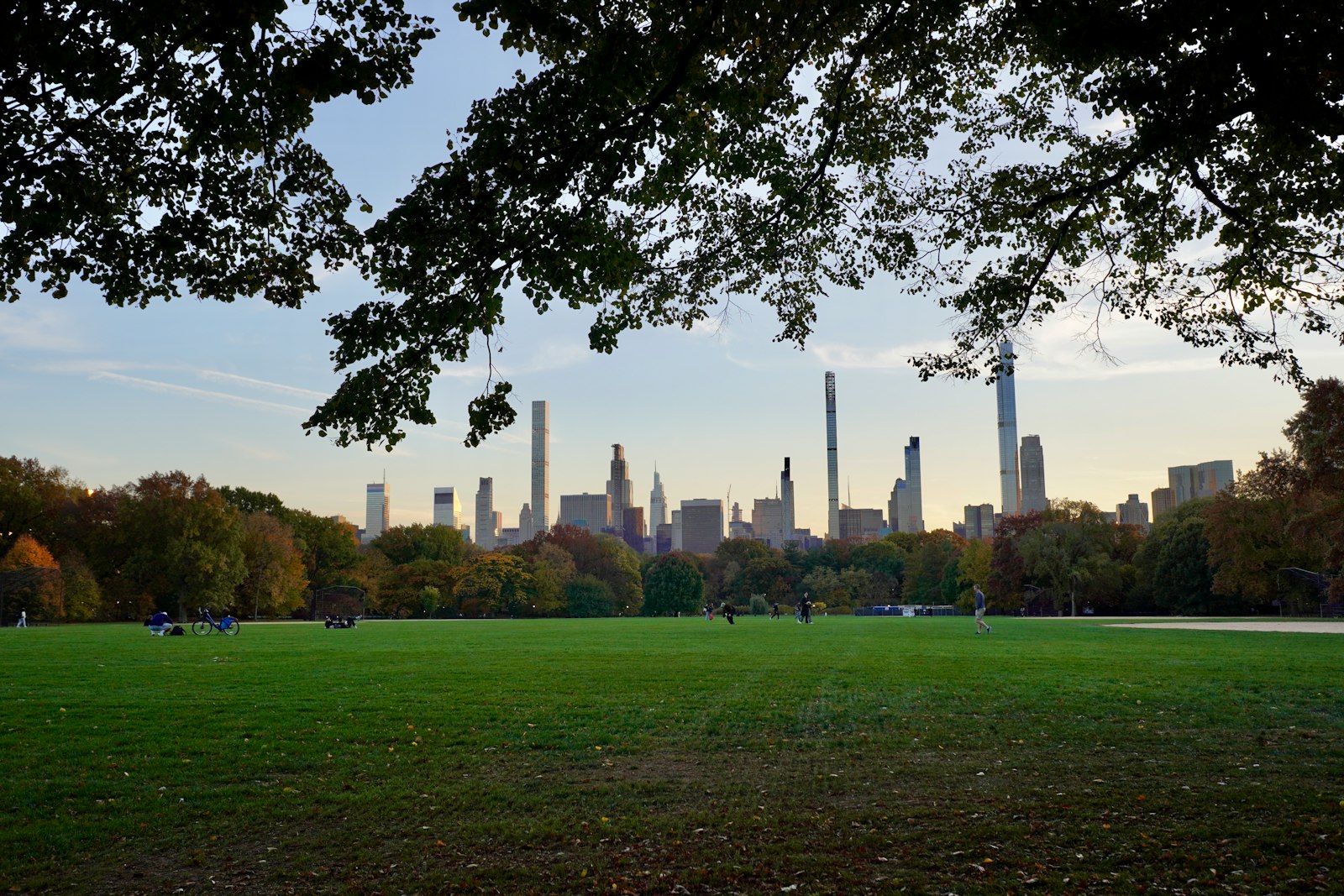
Start at Columbus Circle (A, B, C, D or 1 to 59th Street-Columbus Circle) and walk east along 57th Street. The pencil-thin towers rising south of Central Park are the reason the strip earned its nickname. Central Park Tower at 225 West 57th Street is the tallest residential building in the world at about 1,550 feet. Steinway Tower at 111 West 57th Street is one of the skinniest skyscrapers ever built. Around the corner, 220 Central Park South holds a penthouse that hedge fund manager Ken Griffin bought in 2019 for about $238 million, the most expensive home ever sold in the United States at the time. Griffin moved his firm to Miami, so he does not count as a New Yorker on this list. His apartment still does.
Look up, then look at the street-level windows, many of which stay dark at night. A lot of these apartments are second, third or fourth homes. That is the part of Billionaires’ Row that bothers locals most: some of the most expensive housing in the world, and nobody home.
Stop 2: Fifth Avenue and the Upper East Side
Walk up Fifth Avenue along the park. The limestone co-op buildings between 60th and 96th Streets have housed New York’s old money for a century, and their boards are famous for turning away people richer than you and me combined. Stop at the Met’s front plaza on 82nd Street, the Koch-funded one, and rest on the steps. The side streets between Fifth and Park Avenues are lined with townhouses worth tens of millions of dollars. Walk them quietly. Somebody inside is on a very important call.
Stop 3: Park Avenue, the Money Corridor
Cut over to Park Avenue in the 40s and 50s. This stretch is home to the headquarters of some of the largest investment firms in the world, including Blackstone at 345 Park Avenue. It is the least exciting stop visually and the most important financially. Stand on the median between the lanes of traffic for one second, look downtown toward the Helmsley Building and Grand Central, then get off the median, because the taxis do not care how rich the neighborhood is.
Stop 4: The Schwarzman Building, Fifth Avenue and 42nd Street
Finish at the library. It’s free and it’s beautiful, and after a day of looking at towers you cannot enter, it is satisfying to walk into a billionaire’s namesake building and sit wherever you like. Bryant Park, right behind it, is the best place in Midtown to sit with a coffee and do absolutely nothing for an hour, which is the one luxury in this city that is still free.
Bonus Stop: Hudson Yards and Citi Field
If you have more time, the 7 train is the billionaire line. At one end of it is Hudson Yards, Stephen Ross’s neighborhood built from scratch. At the other end, in Queens, is Citi Field, Steve Cohen’s ballpark. In between you pass through some of the best and most affordable food neighborhoods in the city, including Long Island City, Sunnyside, Woodside and Jackson Heights. My advice: get off the train in Jackson Heights and eat. That part costs about $15, and it beats anything in the Hudson Yards food hall.
What I’d Skip
- Trying to get into a Billionaires’ Row lobby. You will not get past the desk, and the doorman has seen your move before.
- Celebrity mansion bus tours. Half the addresses are wrong and the other half are behind scaffolding.
- The Hudson Yards mall. Look at the architecture, then go eat somewhere with a chef who has a name instead of a brand.
- Waiting outside a hedge fund office hoping for a sighting. Hedge fund billionaires look like every other man in a fleece vest on Park Avenue. You will never know.
My Take: What All This Money Means for the Rest of Us
Fifty-four people holding $722.2 billion in one city is a staggering concentration of wealth, especially in a place where a one-bedroom apartment can eat most of a teacher’s paycheck. The towers on 57th Street and the empty windows at night are the clearest picture of that gap you will find anywhere.
On the other hand, I have spent my whole life in reading rooms, theaters, parks and museums that exist in part because rich New Yorkers wrote very large checks. The library, Lincoln Center, the Met’s plaza and a lot of the city’s hospitals and universities carry their names. New York has always run on that bargain: the very rich get their names carved in stone, and the rest of us get to use the buildings. I think the bargain could be fairer. I also think I will be back in that reading room next week.
If you want more on how the rest of us live with all this, read our list of NYC stereotypes that are actually true, and if you’re walking the Midtown stops above, our guide on whether Midtown Manhattan is safe is worth five minutes first. For a smaller-scale success story, we also covered Damon Darling’s net worth.
Frequently Asked Questions
Who is the richest person in New York City?
Michael Bloomberg, with an estimated net worth of about $94.9 billion on the 2026 Forbes 400. Almost all of it comes from his roughly 88% stake in Bloomberg L.P.
Who is the richest woman in New York?
Julia Koch, who with her family is worth about $84.6 billion, from the stake in Koch Inc. inherited from her late husband, David Koch. She ranks No. 17 on the 2026 Forbes 400.
How many billionaires live in New York City?
The 2026 Forbes 400 counts 54 billionaires living in New York City, with a combined net worth of about $722.2 billion. That count only includes people worth at least $4.4 billion, the list’s minimum this year, so the total number of billionaires in the city is higher.
Where do most New York billionaires live?
Mostly in Manhattan, especially on the Upper East Side along Fifth and Park Avenues, and increasingly in the new supertall towers on and around West 57th Street, known as Billionaires’ Row.
Can you visit Billionaires’ Row?
You can walk it for free. The towers are private residences, so you cannot go inside, but the view from 57th Street and from the southern edge of Central Park is worth the walk. Start at Columbus Circle and head east.
Is Steve Cohen a New Yorker?
He grew up in Great Neck on Long Island and owns the New York Mets, but he lives in Connecticut and runs Point72 from Stamford. I included him for the Mets. You may disagree, and many Yankees fans will.
That’s my billionaire tour. Net worth figures change daily with the markets, so check the latest Forbes numbers before you quote them, and check the library and stadium hours before you go. As for me, I’ll be in Williamsburg, rich in coffee and short on square footage, planning my next trip on a budget none of these people would recognize.
Born and raised amidst the hustle and bustle of the Big Apple, I’ve witnessed the city’s many exciting phases. When I’m not exploring the city or penning down my thoughts, you can find me sipping on a cup of coffee at my favorite local café, playing chess or planning my next trip. For the last twelve years, I’ve been living in South Williamsburg with my partner Berenike.